Side by side
| PETG | ASA | |
|---|---|---|
| Softens around | 175°F (80°C) | 210°F (100°C) |
| Direct sun (UV) | Fades and turns brittle over seasons | Made for it; keeps colour and strength |
| Rain and humidity | No problem | No problem |
| How it fails | Bends and stretches first | Stays rigid, then cracks |
| Layer bonding | Very good | Good on an enclosed printer, poor on an open one |
| Surface | Glossy, a little stringy | Matte, sands and paints well |
| Printer needed | Any decent open printer | Enclosed, heated if possible, ventilated |
| Cost | Lower | Higher, in filament and in machine time |
Heat
The numbers above are glass transition temperatures: the point where the plastic goes from rigid to rubbery. A part carrying a load starts to creep a little below that, so leave a margin.
PETG's 175°F covers most places a printed part ends up: a garage, a shed, a shaded patio, the inside of a car away from the glass. It runs out of margin on a dashboard under a windshield, next to an engine, or as a dark part bolted to something metal in summer sun. ASA's extra 35°F is what makes those spots safe. The parked-car numbers are in PLA vs PETG vs ASA in a hot car.
Sun and weather
This is the real difference. ASA was developed as a weather-resistant version of ABS; it is the plastic used for car mirror housings and outdoor trim. Years of direct sun barely change it.
PETG is fine with water. It does not swell, rot or rust, and it shrugs off most cleaners and fuels. Ultraviolet light is slower trouble: over a few seasons in full sun a PETG part loses some colour and gets more brittle, so a clip that used to flex snaps instead. In shade, or under a roof, PETG lasts for years.
Strength
"Which is stronger" depends on what the part has to do.
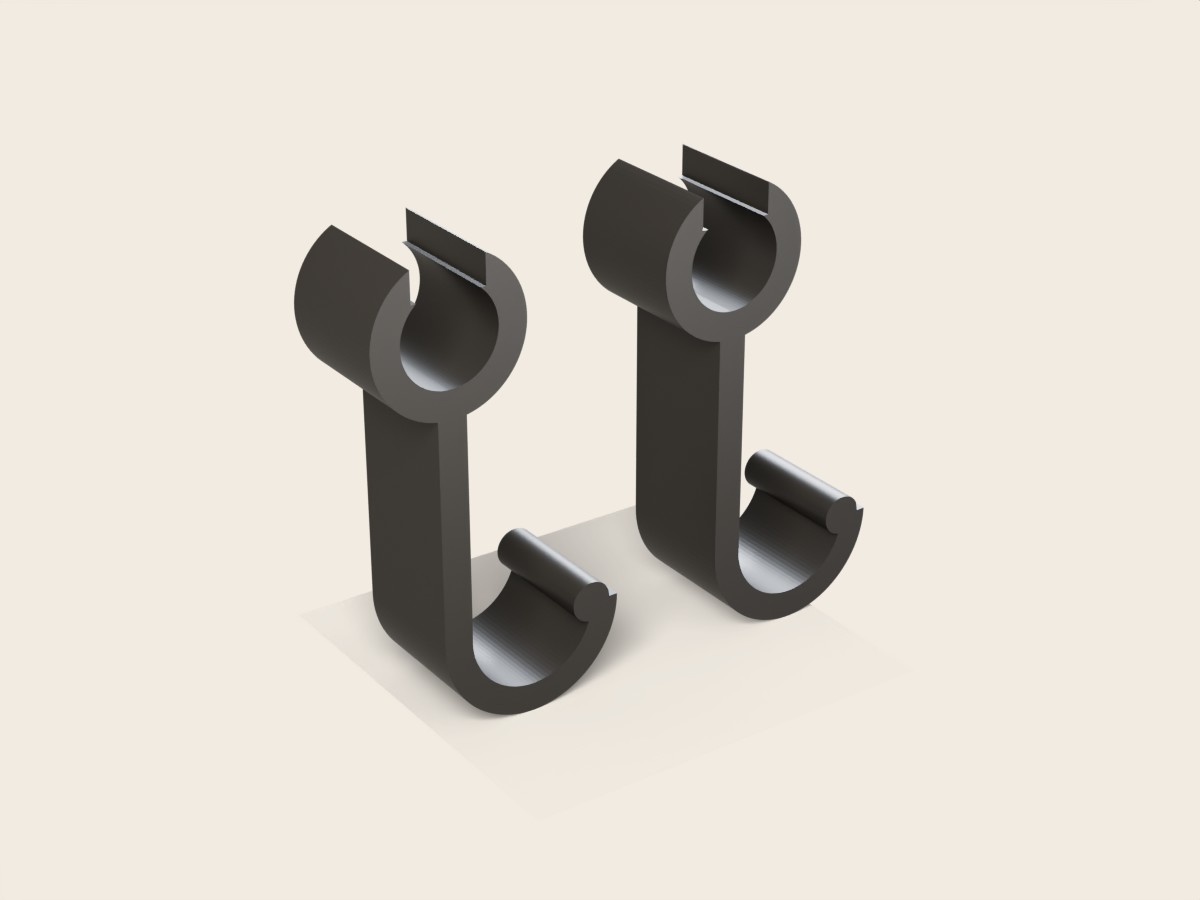
- Taking a hit or flexing: PETG. It gives before it breaks, and its layers fuse so well that parts rarely split along the layer lines. Good for clips, hooks, brackets that get bumped, anything snap-fit.
- Staying rigid under a steady load: ASA. It is stiffer and it creeps less, especially when warm. Good for mounts, housings and anything that has to hold a dimension.
- Threads and screw bosses: either works. PETG forgives an overtightened screw; ASA holds a heat-set insert slightly better at temperature.
How hard each is to print
PETG prints on an ordinary open printer. Its faults are cosmetic: thin strings between features and a glossy surface that shows them. It also soaks up moisture from the air, so damp filament gets dried first or the surface comes out rough.
ASA is the difficult one. It shrinks as it cools, so on an open printer corners lift off the bed and tall parts crack between layers. It needs an enclosure that keeps the whole part warm until the print ends, and it gives off styrene fumes, so the printer needs ventilation or a filter. That extra equipment and the slower, more careful printing are why ASA costs more per part than the filament price alone would suggest.
Finishing
ASA sands cleanly, takes primer and paint, and can be smoothed with acetone vapour. PETG is harder to finish: it gums up sandpaper, most glues grip it poorly and paint needs a plastic primer. If the part will be painted or glued into an assembly, that leans toward ASA.
The rule
- Full sun, outside for years, or above about 160°F: ASA.
- Top of a dashboard, behind a windshield, on the outside of a car: ASA.
- Indoors, in shade, in a garage, most of a car cabin: PETG.
- Clips, hooks and snap-fits anywhere out of the sun: PETG.
- Wet places (boats, pool gear, planters) in shade: PETG. In sun: ASA.
- Will be painted: ASA.
What gets printed here
PETG is the default for functional parts at Z-Seam and prints now. ASA runs on the enclosed H3C printers, so ASA orders are queued until those machines are running; the material guide shows the current status. If you are not sure which one a part needs, say where it will live in the quote notes and it gets quoted in the right one.